Do Not Disturb Funny Prankster
Tapps GamesEducational
4.610.75K Reviews
- Version
- 1.4.141
- Installs
- 50.00M
- Age Rating
- Everyone
Screenshots
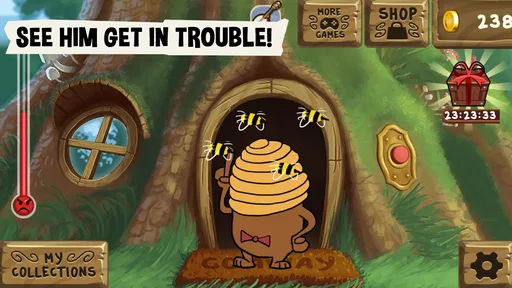
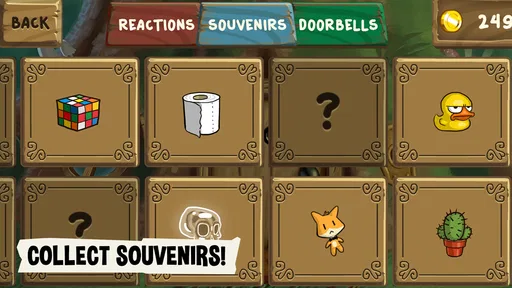
Our Review of Do Not Disturb Funny Prankster
 Analysis by Appyee
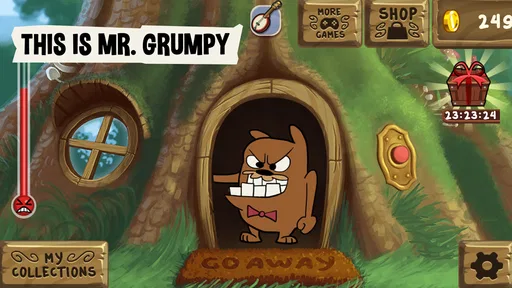
I first approached Do Not Disturb Funny Prankster expecting a very simple joke game, and that is exactly where its appeal begins. You meet a neighbor through a series of playful interactions, then experiment with ways to disturb the peaceful scene without turning the experience into a complicated project. It is a light educational game from Tapps Games, but “educational” here feels more like learning through observation, timing, and cause-and-effect than studying a formal subject.
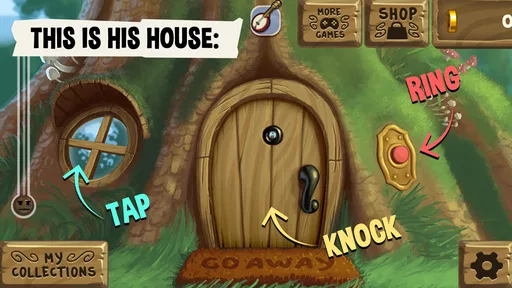
The basic idea is easy to understand: knock, watch, try something mischievous, and see how the neighbor reacts. That simplicity makes it approachable for children and casual players, while the humorous reactions give adults a reason to try a few more times. I found it best suited to short sessions when I wanted something amusing rather than a demanding adventure, puzzle campaign, or competitive challenge.
It is free to start and carries an Everyone age rating, which makes it a fairly accessible choice for families. The game has also built a large audience, with over 50 million installs and a 4.6 average from around 231 thousand ratings. Those figures suggest that its quick prank format has reached far beyond a small niche, although popularity does not change the fact that this is intentionally a compact, repetitive style of play.
How the first goals create curiosity
The early goal is not presented as a grand mission with a complicated story. Instead, the immediate objective is to understand the neighbor’s routine and discover what kind of interaction produces a funny response. I like this approach because it gets me playing almost instantly. There is no need to learn a large control scheme or memorize a long list of rules before the joke can begin.
That first phase works through curiosity. A knock may be enough to start, but the real invitation is to ask what happens if I try a different action, wait for another moment, or repeat an interaction in a slightly altered way. The game turns the familiar idea of knocking on a door into a small experiment. For younger players, that can encourage attention to sequence and reaction; for older players, it is a quick dose of harmless mischief.
One useful way to play is to resist tapping randomly. I get more from it when I treat each attempt as a test: observe the scene, choose one action, notice the result, and remember what changed. That simple habit makes the early encounters feel more purposeful and helps prevent the game from becoming a string of disconnected taps.
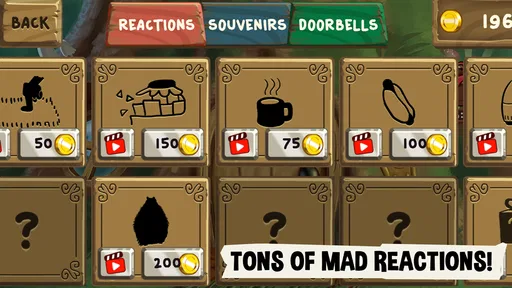
The humor is also important to the opening. The neighbor is not just a target waiting for a button press; the character’s response gives the action its meaning. Without those reactions, the concept would feel empty. With them, even a small interaction can become satisfying because the payoff is visual and comic rather than based on a score alone.
What progress feels like in practice
Progress in a prank game like this is communicated less through traditional role-playing numbers and more through discovery. I notice that I am moving forward when I understand another interaction, recognize a pattern, or find a response I had not seen before. That is a different kind of progress from collecting equipment or improving a character’s statistics, and it is worth knowing before downloading.
The game’s strongest progress signal is the reaction itself. A successful prank feels complete when the neighbor responds in an amusing way. This makes each small discovery self-contained, which is convenient for short play sessions. I can spend a few minutes exploring, stop, and return later without needing to reconstruct a complex strategy.
At the same time, players who need a visible checklist, a deep upgrade tree, or a strong sense of long-term achievement may find the progression less motivating. The satisfaction comes from seeing what the game allows me to trigger, not from building a powerful avatar or preparing for a major final encounter. That distinction is central to deciding whether the format suits you.
I also found that the game rewards patience more than speed. A rushed player may tap through an interaction and miss why it was funny. Taking a moment to watch the setup and reaction makes the prank feel more deliberate. This is one of the less obvious strengths of the design: it quietly turns a very simple game into an exercise in noticing small visual cues.
Difficulty and the shape of the challenge
The challenge is gentle at the beginning, which is appropriate for an Everyone-rated game aimed at broad accessibility. The first interactions are easy to understand, and the game does not demand advanced reflexes. I never felt that I needed gaming experience to participate, making it suitable for a child exploring independently or for an adult looking for a low-pressure distraction.
Where the challenge becomes more interesting is in figuring out what the game expects from an attempt. The difficulty is not mainly about fast movement or precise combat. It comes from discovering the right idea, noticing the available opportunity, and understanding how the scene reacts. That creates a mild puzzle quality without turning the experience into a conventional brain-training app.
Its difficulty curve is therefore more about knowledge than execution. Once I understand the logic of an interaction, repeating it is usually less exciting than finding a new possibility. This keeps the opening approachable, but it can also make later play feel flatter for anyone hoping for increasingly demanding stages.
For a younger player, I would recommend letting them explore rather than immediately explaining every possible action. The trial-and-error structure is part of the fun, and discussing why a reaction happened can turn a few minutes of play into a small lesson about observation and consequences. For a parent, that is a more realistic educational benefit than expecting the game to teach a formal school topic.
Players who prefer difficult puzzles, strategic planning, or precise skill tests should approach with different expectations. A dedicated puzzle game will usually offer more layered problem solving, while an action game will provide stronger pressure through timing and failure. This title sits between those experiences: it uses experimentation and humor, but keeps the stakes low.
What keeps the prank loop interesting
The retention appeal comes from the question, “What happens if I try this?” That question can be surprisingly effective when the reactions are entertaining. I often found myself continuing not because I was chasing a powerful reward, but because I wanted to see whether another interaction would produce a different comic result. The loop is immediate: choose an action, receive a reaction, then decide whether curiosity is strong enough for another attempt.
This structure works especially well in everyday situations. If I have a short wait before an appointment, need a break between tasks, or want to hand a child something easy to understand, the game can fill that gap without requiring a long commitment. It is more convenient than starting a story-heavy game that expects me to remember a plot or finish a mission before stopping.
There is a trade-off, though. The same short-loop design that makes the game welcoming can reduce its staying power. Once the novelty of the reactions fades, there may be less reason to return unless I enjoy revisiting the humor. It does not have the same natural retention pressure as a competitive game with changing opponents or a progression-heavy title with constant upgrades.
In-app purchases range from $0.99 to $9.99 per item. Because the game is free to begin, I would suggest playing long enough to decide whether the prank-and-reaction loop genuinely holds my attention before spending anything. A purchase can make sense for someone who already enjoys the format, but it is harder to justify if the initial novelty has already worn off.
Another practical point is that the experience depends heavily on personal tolerance for repetition. I enjoy replaying a funny interaction occasionally, but I would not choose this as my only game for a long journey. For that situation, I would prefer something with broader exploration, deeper puzzles, or a clearer campaign. Here, the best sessions are short and casual rather than marathon-length.
Three ways to get more from each session
Use an observation-first routine: watch the scene before touching the screen, then change only one action at a time. This makes it easier to understand what caused a reaction instead of blending several attempts together.
Play it as a shared discovery game: let another person suggest the next prank before revealing your own idea. The humor becomes more social, and younger players can practice explaining what they noticed.
Set a natural stopping point: finish after discovering a new reaction rather than continuing until every attempt feels repetitive. This protects the game’s strongest quality—surprise—and makes returning later more appealing.
These habits are not required, but they address the main weakness of the format. If I simply tap through everything as quickly as possible, the game can feel shallow. If I slow down, compare reactions, and treat each attempt as a small experiment, the design has more personality than the short store summary might suggest.
Who should play it, and who should skip it
I would recommend it to casual players who enjoy cartoon humor, simple experimentation, and games that can be understood without instructions. It is also a reasonable choice for families looking for something approachable and non-competitive. The Everyone rating supports that broad audience, while the prank theme gives the game a distinctive personality compared with ordinary matching, trivia, or educational quiz apps.
It may also suit someone who wants a gentle introduction to mobile games. The controls are not intimidating, the objectives are immediate, and failure does not feel punishing. A new player can learn by trying things rather than studying a tutorial or managing a complicated inventory.
I would skip it if I am looking for a serious learning tool, a long narrative, or a deep progression system. Although it belongs to the educational category, its value is informal and playful. It encourages observation and experimentation, but it should not replace a structured lesson or a dedicated educational platform.
I would also choose another game if I need constant challenge. Players who enjoy difficult logic problems, strategic resource management, or competitive rankings may find the prank loop too limited. A puzzle game is better when I want to think through several connected steps, and an action game is better when I want pressure, precision, and escalating danger.
Practical details before installing
The game was released on June 27, 2013, and the current version is 1.4.141. It requires Android 8.0 or later, so checking the operating system before installing is sensible if the device is older. The developer is Tapps Games, a name associated here with this playful neighbor-and-prank concept.
It is free to download, with optional in-app purchases in the stated price range. I would keep that purchasing model in mind if a child will use the device, especially because the game’s simple presentation can make it easy to focus on the humor and overlook purchase prompts. The Everyone age rating makes it broadly accessible, but normal device-level purchase protections are still a sensible precaution.
The large install base and strong average rating indicate that the concept has connected with many players, but they should be read alongside the game’s narrow focus. A high rating does not mean it offers the depth of a full adventure or the curriculum of a serious learning app. It means the central joke, presentation, and accessible interaction work well for a substantial audience.
My verdict on its progression and staying power
Do Not Disturb Funny Prankster succeeds because it understands its own scale. Its early goals are clear, its progress is signaled through discoveries and reactions, and its difficulty stays gentle enough for almost anyone to try. The pacing is strongest when I play in short bursts and allow curiosity to guide the next prank.
The progression verdict is more mixed once the initial surprise fades. The game offers a pleasant reason to experiment, but it does not provide the kind of layered advancement that keeps me invested for weeks. Its retention pressure comes from humor and unanswered possibilities rather than a demanding challenge or a substantial long-term objective.
That is not a flaw for the right audience. If I want a quick, funny, family-friendly game that turns a simple neighbor encounter into a series of small experiments, I can recommend it. If I want deep educational content, a demanding challenge curve, or a large progression system, I would look elsewhere.
My final advice is to treat it as a compact comedy playground, not as a full-scale adventure. Play attentively, share the discoveries with someone else, and stop when the reactions begin to feel predictable. Used that way, the game’s simplicity becomes its advantage: it is easy to start, easy to understand, and capable of delivering a few genuinely amusing moments without asking for a major time commitment.
Verdict
Strengths of Do Not Disturb Funny Prankster
- Simple controls make it easy to set up a prank quickly.
- Funny sound effects can entertain friends during casual moments.
- Lightweight app that should require little storage space.
- Works well for short, spontaneous jokes without a long learning curve.
- Suitable for users looking for a basic, playful prank experience.
Limitations of Do Not Disturb Funny Prankster
- Humor may feel repetitive after trying the available prank options.
- Some features may be limited unless extra content is unlocked.
- Pranks can annoy others if used without their permission.
- The app may contain advertisements during use.
- Its entertainment value depends heavily on the reactions of other people.
Other Releases by Tapps Games
View All
Vlogger Go Viral: Tuber Life
Strategy4.5

My Monster Album - Collect & T
Educational4.4
Similar Picks in This Category
View All
Little Panda Policeman
BabyBus4.0

Monster Trucks Game for Kids 2
Raz Games4.1

Little Panda's Chinese Recipes
BabyBus4.4

Little Panda's Restaurant
BabyBus4.4

Little Panda's Ice Cream Games
BabyBus4.3

Baby Panda Care
BabyBus3.8
Frequently Asked Questions
What is Do Not Disturb Funny Prankster?
Do Not Disturb Funny Prankster is an interactive prank and entertainment app centered on a mischievous character who reacts to taps, touches, and different on-screen actions. It is designed for casual fun rather than productivity or communication. After trying it, I found that the main appeal comes from discovering the character’s reactions and using the app to entertain friends for a few minutes.
How does Do Not Disturb Funny Prankster work?
The app is simple to use: launch it, interact with the character or available objects, and watch the resulting animations, sounds, and reactions. There is no complicated tutorial or advanced setup required. Some responses may depend on where and how you tap, so experimenting with different areas of the screen is part of the fun. The experience is best suited to short, casual sessions.
Is Do Not Disturb Funny Prankster suitable for children?
The app may be entertaining for children because it uses colorful visuals, playful interactions, and humorous reactions. However, parents should review the app’s age rating, advertising, in-app purchase options, and privacy information before allowing unsupervised use. Depending on the version and platform, some content or advertisements may not be appropriate for every age group, so parental supervision is recommended.
Does Do Not Disturb Funny Prankster require an internet connection?
Basic interactions may work without a constant internet connection, but the exact offline experience can vary by device and app version. Internet access may be needed for advertisements, analytics, updates, or certain additional features. If you want to avoid unexpected mobile-data usage, it is sensible to test the app over Wi-Fi first and check its permissions before using it regularly.
Is Do Not Disturb Funny Prankster free to download?
Do Not Disturb Funny Prankster may be available as a free download, although the free version can include advertisements, optional purchases, or limitations on certain content. Store listings and pricing can change depending on whether you use Android or iOS and where you live. Before downloading, check the official store page for the current cost, permissions, age rating, and purchase details.
Play our best games!


